ServicesWall Repair
Wall Repair in Mineola
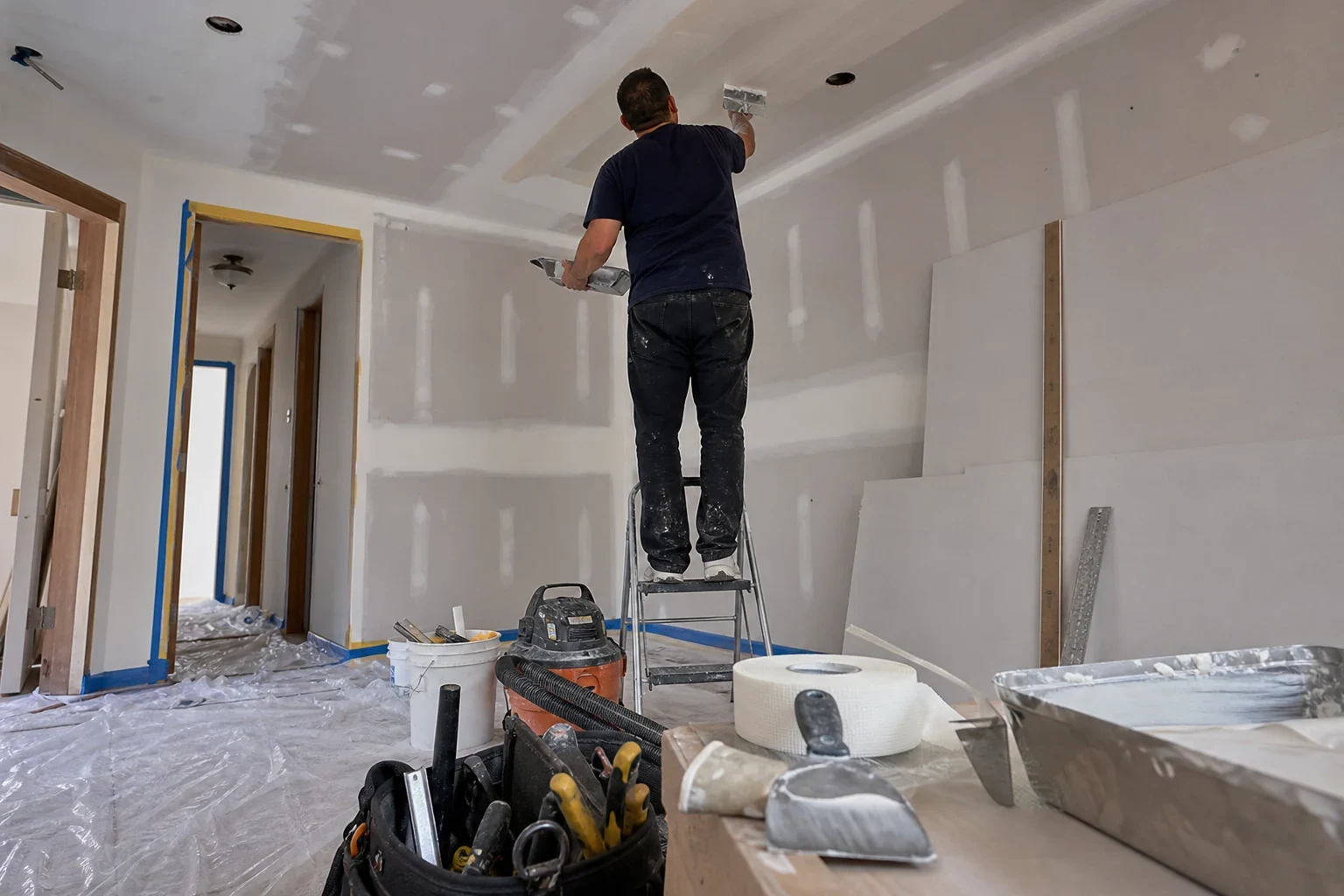
Cracks over a doorway, a dent from a moving day, a stain left by an old leak. We repair the damaged section of your wall, match the surface around it and leave a clean work area. The same people who look at the wall are the ones who fix it.
When wall repair is the right call
Wall repair is for damage that goes beyond a single small hole. Think long cracks that keep coming back, sections that feel soft or bulge, corners that have split open, or a wall that took a few hits during a renovation. The goal is a wall that is solid again and looks like nothing ever happened to it.
Plenty of homes around Mineola still have plaster walls in some rooms and drywall in others. The two behave differently, so we look at what your wall is made of before we decide how to fix it. Plaster cracks often need the loose material secured, not just filled.
We are a small team, and we keep it that way on purpose. The person who comes out to see your wall is on the job through the final sanding, so nothing gets lost between visits and you always know who is in your home.
What our wall repair covers
- Recurring crack repair
- We open the crack, clean out loose material and reinforce it with mesh or paper tape before applying compound. Filling a crack with spackle alone is why so many come back after one season of heating and cooling.
- Plaster wall stabilizing
- When plaster pulls away from the lath behind it, we fasten it back with plaster washers and screws before patching. If a section is too far gone, we cut it out and fill it with drywall set flush to the old surface.
- Dents, gouges and impact damage
- Furniture scrapes, doorknob holes and chair-back dents get cut back to sound material and rebuilt. Larger holes are handled with the same care we use for drywall patching.
- Water-stained and soft sections
- Once you have confirmed the leak is fixed, we remove any drywall that has gone soft or crumbly and replace it. Stains that are only on the surface get a stain-blocking primer so they do not bleed back through.
- Outside corners and corner bead
- Dented or cracked metal corner bead is replaced, and new bead is set straight and finished so the corner reads as one clean line.
- Texture matching and touch-up
- We match the existing finish, smooth or textured, so the repair blends in. If you want the patched spot brought back to color, we can handle a paint touch-up on that area.
Signs your wall needs more than a dab of spackle
The same crack keeps reappearing
If you have filled it before and it is back, the crack was never reinforced. It needs to be opened up and taped.
The wall sounds hollow or moves when pressed
On plaster walls, this usually means the plaster has lost its grip on the lath. Left alone, chunks can loosen and fall.
Bubbling, peeling or a brown ring
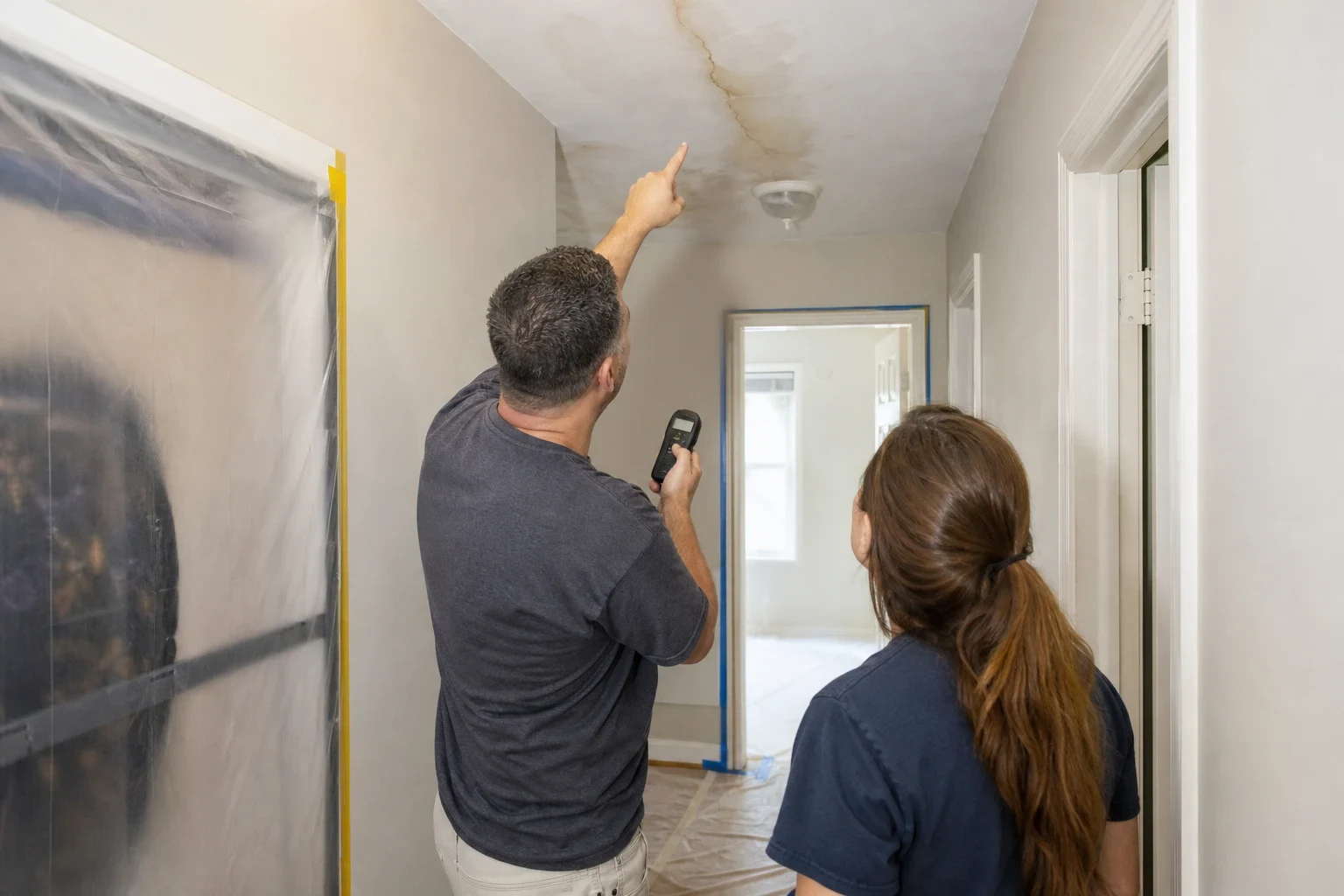
These point to moisture that got into the wall at some point. The drywall behind may be weakened even if the surface looks dry now.
Nail pops in a row
A line of small round bumps means fasteners have backed out. We reset them and finish over the spots.
Lines angling up from doors and windows
Framing shifts a little over the years, and that stress tends to collect at the top corners of openings, so these slanted lines show up there first. With proper tape and compound, they repair cleanly.
How a wall repair job goes
- 1
A look at the damage
We come out, check what the wall is made of and how far the damage goes, and explain what we would do. You get your quote by phone or in person, with the work spelled out.
- 2
Protecting the room
We move what needs moving, lay down drop cloths and cover nearby furniture. Doorways get plastic sheeting when we expect dust.
- 3
Repair and drying time
We cut out bad material, secure or replace what is needed, and apply compound in thin coats. Most repairs need drying time between coats, so many jobs run over two or more short visits, with the same crew each time.
- 4
Sanding and final check
We sand the repair smooth, match the texture and check it under raking light so ridges and edges show up before we leave, not after. Then we clean up and walk you through the finished wall.
What affects the cost of wall repair
Every wall is a little different, so we price each job after seeing it. A few things move the number more than anything else, and we will tell you which ones apply to your wall before work starts.
- Plaster or drywall
- Plaster walls often need stabilizing before they can be patched, which adds time. Drywall repairs are usually more direct.
- Size and number of damaged areas
- One long crack is a different job than several damaged spots across a room. Grouping repairs into one visit is usually more efficient.
- What is behind the surface
- Soft or water-damaged material has to come out and be replaced, and we only know the full extent once we open it up. If we find more than expected, we stop and talk with you first.
- Texture and finish
- Matching a heavy or hand-applied texture takes longer than blending a smooth wall. A paint touch-up on the repaired area is a separate line you can choose.
Wall repair questions
Something not covered here? (516) 973-0369
My older rooms have plaster. Does it all have to come out?
Usually not. When most of the plaster is still firm, we fasten the loose areas back to the lath and repair them where they are, so the room keeps its original walls. Only sections that are crumbling get cut away, and we fill those openings with drywall set level with the plaster around them.
Will I be able to see where the repair was?
Our aim is that you cannot. We feather the compound well past the damaged area, sand it smooth and match the texture. Fresh compound does need primer and paint to fully disappear, and we can do a paint touch-up on the repaired spot if you want it.
Why does my wall crack in the same spot every year?
Walls move slightly as the house heats and cools through the seasons. A crack that was only filled, without tape or mesh, has nothing holding it together, so it opens again. Reinforcing it is what stops the cycle.
How much dust should I expect?
Some sanding dust is part of any wall repair, but we keep it contained with drop cloths and plastic over doorways. We clean up at the end of each visit so you are not living in a work zone between coats.
I am a landlord. Can you work around a tenant?
Yes. We can coordinate visit times with you and your tenant, and since the same small crew handles every visit, your tenant sees familiar faces each time.
Let's get that wall solid again
Give us a quick rundown of the damage and which room it's in. We'll go over your options, pick a time to come take a look, and the same crew will stay with the job until the wall is finished and the room is tidy.