ServicesPaint Touch-Ups
Paint Touch-Ups in Mineola
Even a well-done repair gives itself away when the paint on top is slightly off in shade or shine. We seal the spot with primer, match your color and sheen, and soften the edges so the fix disappears into the rest of the wall.
Paint that finishes the repair
A paint touch-up is the last step that makes a wall look whole again. It covers a fresh patch, a scuffed hallway, nail holes from old pictures or the spot where a doorknob met the wall one too many times.
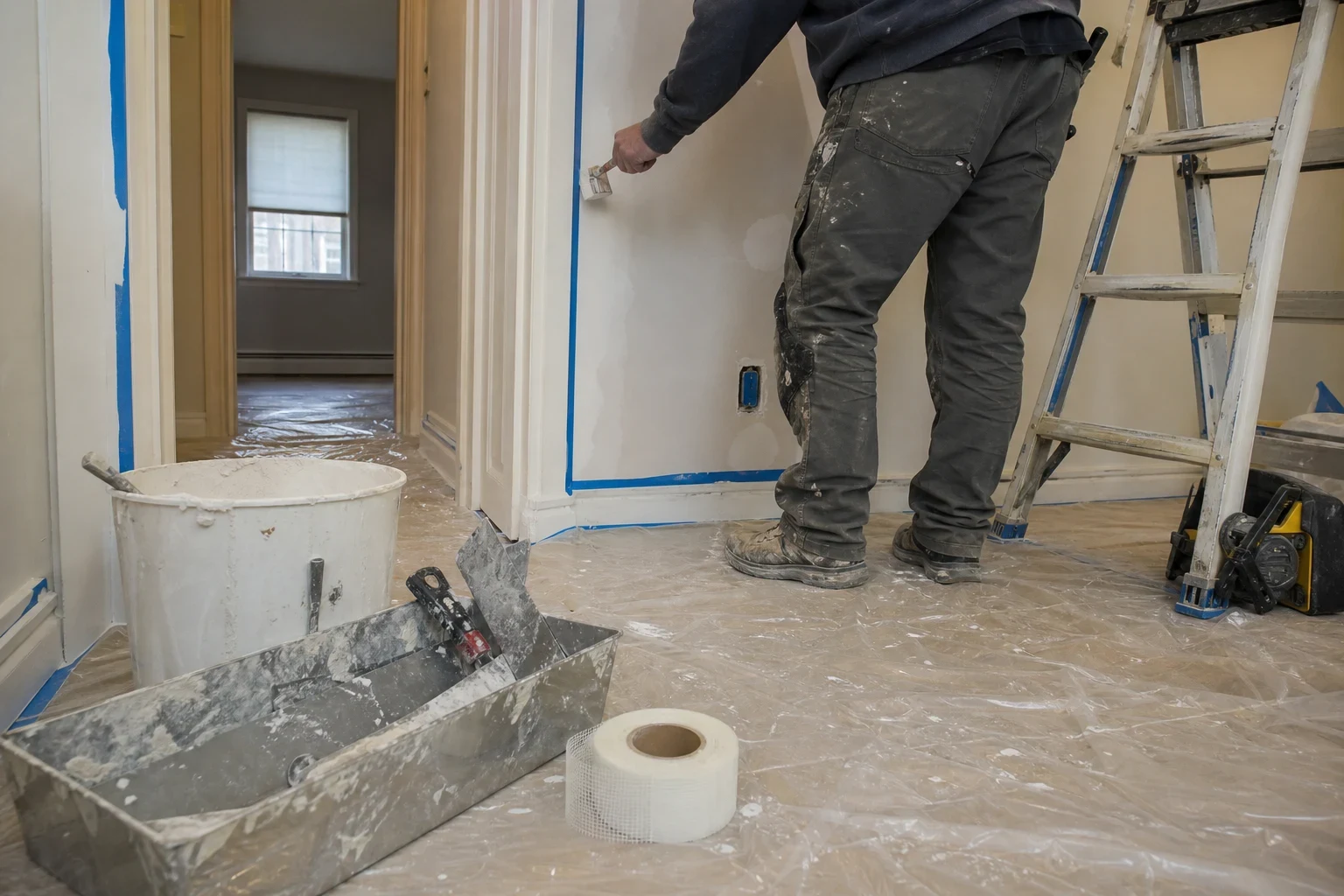
The tricky part is not the color. It is the sheen and the surface under it. Bare joint compound soaks up paint differently than the painted wall around it, so an unprimed patch dries dull and shows as a flat square in raking light. We seal it first, then build the paint up in thin coats.
The same people who look at your wall are the ones who prime, paint and clean up. You are not explaining the job twice, and nobody is guessing what the last person meant to do.
What a touch-up visit includes
- Color and sheen check
- We look at the paint you already have, read the label on any leftover cans, and compare flat, eggshell or satin against the wall before anything goes on.
- Spot priming
- Every patch and bare area gets a coat of primer so the topcoat dries evenly. This is what keeps a repaired spot from flashing when the afternoon sun hits it.
- Feathered application
- We roll or brush outward past the repair and soften the edge, so there is no hard line where new paint meets old. On larger areas we carry the paint to a natural break like a corner.
- Minor fixes before paint
- Nail pops, tiny dings and hairline marks get filled and sanded first. Bigger damage belongs on our Drywall Patching or Wall Repair visit, and we will tell you which you need.
- A clean work area
- Drop cloths go down, nearby furniture is covered, and we take our rags, tape and trays with us when we leave.
Signs a touch-up is the right call
A patch you can still see
The hole is gone, but a dull or shiny square gives it away. That is usually a primer and sheen problem, not a drywall one.
Scuffs in high-traffic spots
Hallways, stair walls and the area behind chairs collect marks that washing will not lift.
Nail holes after moving art
Rearranging pictures or getting a rental ready often leaves a dozen holes that need filling and a dab of matched paint.
Spots of mismatched paint
Someone touched up before with the wrong sheen or an old can that had changed color. We can correct it so the wall reads as one surface.
Light marks on a ceiling
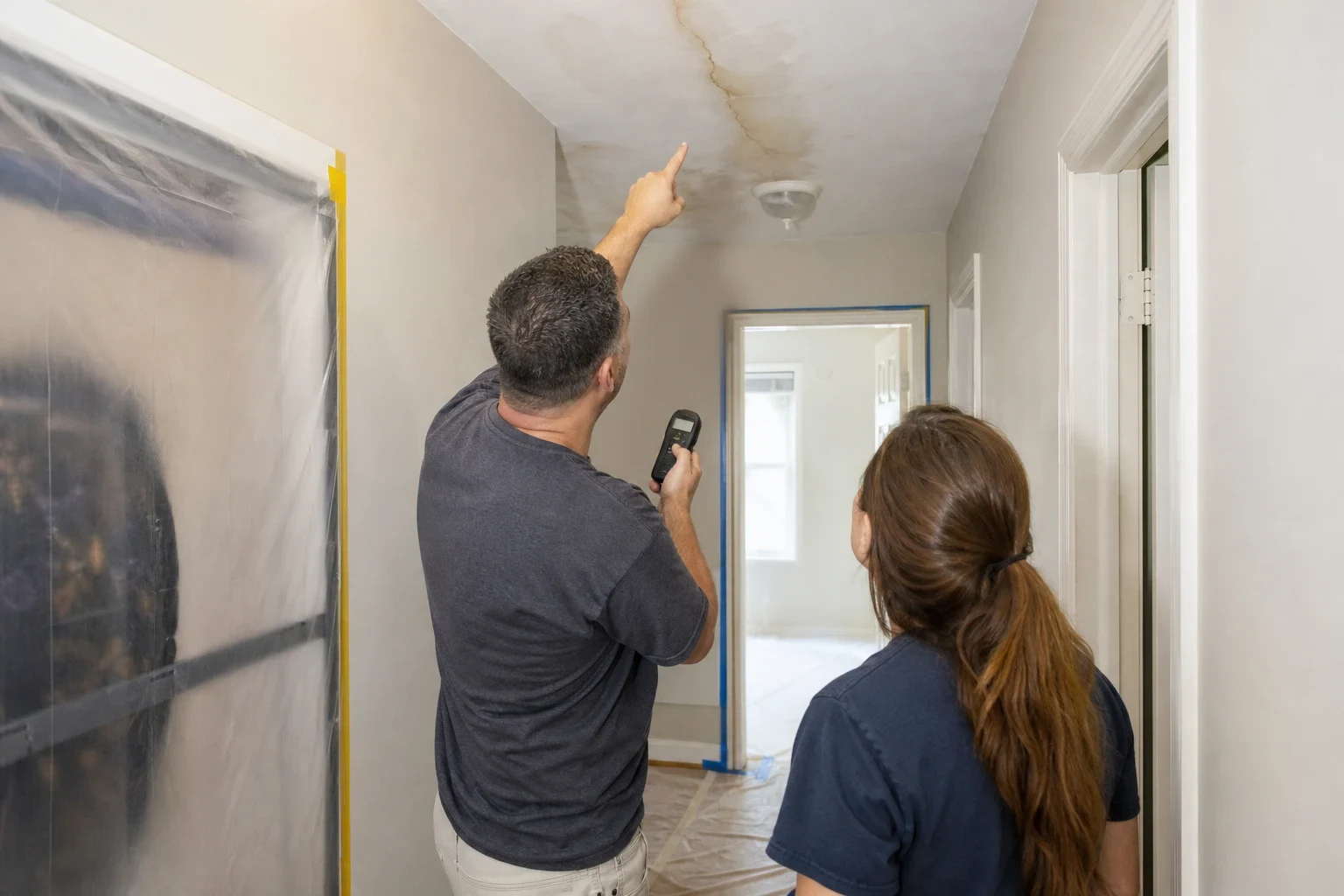
A ceiling stain that has already been sealed, or a repaired crack, often just needs careful paint. For anything more, see our Ceiling Repair page.
How the work goes
- 1
A quick phone conversation
You tell us what the spots are, how many there are and whether you have leftover paint. We let you know what to expect and set a time.
- 2
Look and match
On the day, we check the color and sheen in the room's own light. If there is no can, we work from a chip taken off the wall so the match is based on your paint, not a guess.
- 3
Prep and prime
We clean the area, fill and sand any minor defects, and spot-prime bare compound. Primer needs a short dry time before the topcoat.
- 4
Paint and blend
Thin coats go on and get feathered outward. We check each area from a few angles, because a touch-up that looks fine head-on can show from the doorway.
- 5
Walk-through and cleanup
We look at the work with you, fix anything you are unsure about while we are still there, and leave the room the way we found it.
What moves the price
Touch-ups are priced by the work, not by the room. A few nail holes and one patch is a very different job from a whole stairwell of scuffs. We explain what we see and give you the number by phone or on the visit before we start.
- Number and size of spots
- Several small areas spread through a house take more setup and drying time than one larger area in a single room.
- Matching the paint
- If you have the original can, matching is simple. Without it, sampling and adjusting the color adds time.
- Repairs underneath
- Dents, cracks or loose tape need fixing before paint will look right. Some of that is quick filling; larger damage moves into drywall repair.
- Height and access
- Ceilings, stairwells and spots behind heavy furniture need ladders or extra care, which adds time.
Paint touch-up questions
Something not covered here? (516) 973-0369
Can you match my paint if I do not have the can?
Usually, yes. We take a small sample from an out-of-the-way spot and have it matched. Paint on walls fades and yellows over the years, so even the original can is not always a perfect match, and we check it on the wall before committing.
Will the touched-up spot show?
Our aim is that you stop noticing it. Priming, matching the sheen and feathering the edges do most of that work. If a wall has aged so much that a spot repair will never blend, we will tell you plainly before we start rather than after.
Do you touch up paint after your own drywall repairs?
Yes. When we patch a wall, the same crew can come back once the compound is dry and sanded to prime and paint it. Keeping it with one set of people means the patch is finished with the paint in mind.
How long until I can use the room?
You can usually brush past a freshly painted spot later the same day, since thin touch-up coats set up fast. Give it a few days before scrubbing the area or hanging anything heavy there so the paint has time to cure.
Do I need to move furniture first?
Clearing lamps, frames and knickknacks near the wall helps. We can shift lighter furniture and cover what stays, and we will mention anything heavy when we talk on the phone.
Ready to make that patch disappear
Tell us what you are seeing and whether you have leftover paint. We will explain how we would handle it and give you your quote by phone.