ServicesDrywall Patching
Drywall Patching in Mineola
A doorknob hole or a row of anchor holes should not be the first thing you notice in a room. We patch the damage, match the texture and sand it smooth, and the same person who looks at your wall is the one who finishes it.
When a patch is the right fix
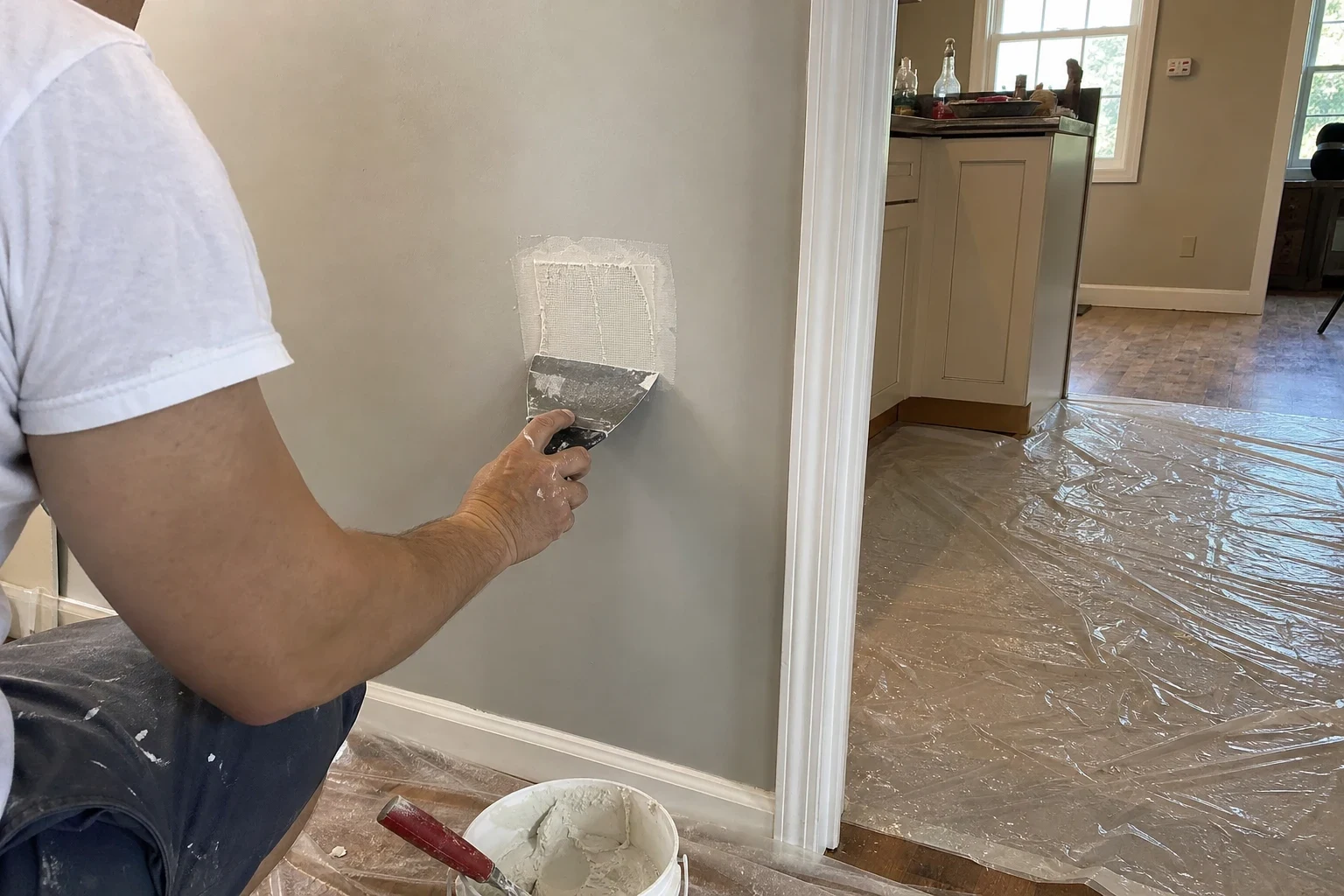
Drywall patching is for damage that stays in one spot: a doorknob that went through the wall, holes left by a TV mount, a gouge from moving furniture, or an opening cut to run a wire. The board around it is still solid, so we fix the damaged area instead of replacing a whole sheet.
Filling the hole is the easy part. The real work is making the repair disappear when afternoon light rakes across the wall. That takes proper backing, thin coats of compound, patient sanding and texture matching so the patch reads like the rest of the surface.
We are a small crew, and we keep it that way on purpose. If the damage turns out to be bigger than a patch, such as soft board from an old leak, we will tell you plainly and talk through our drywall repair service instead.
What our patching work covers
Small holes and nail pops
We fill screw and anchor holes and reset popped nails with a drywall screw so they do not push back out. Each spot gets more than one thin coat, because a single thick dab shrinks and leaves a dimple.
Doorknob-size and larger holes
We cut the damage back to a clean square, add backing behind it, and fit a new piece of drywall. The seams are taped and coated so the patch stays flat and does not crack along its edges later.
Cracks at corners and seams
Hairline cracks over doors and along taped seams are opened up, retaped and recoated. Simply smearing compound over a crack usually lets it return within a season.
Texture matching
Smooth walls need the patch feathered wide and sanded flat. Textured walls get a matching texture applied, then blended at the edges so you cannot find where the old surface ends.
A clean work area
Drop cloths go down, nearby furniture is covered, and we vacuum the dust as we sand. When we leave, the room should look like we were never there, apart from the missing hole.
Signs your wall needs a patch
- A hole you keep looking at
- A doorknob, a chair back or a dropped box went through the wall. The longer it stays open, the more the paper edges fray and the larger the patch has to be.
- Holes left after a move
- Shelves, mounts and curtain rods leave anchor holes behind. Landlords and property managers often see dozens of them between tenants.
- Cracks above doors and windows
- Older homes around Mineola often show thin diagonal cracks at door and window corners as framing shifts with the seasons. Retaping them properly keeps them from coming back each winter.
- An old patch that still shows
- A raised ring, a dull spot under paint, or a square outline you can see from across the room means the earlier repair was not feathered or sanded well. We can redo it so it blends.
- Open cuts from other work
- Electrical or cable work sometimes leaves a rectangle cut out of the wall. We close it with new drywall and finish it flat.
How a patching job goes
- 1
A phone call about the damage
You tell us what happened and roughly how many spots need work. We set a time to see it in person and explain the price before any work starts.
- 2
Protecting the room
We move what needs moving, lay drop cloths and cover furniture close to the wall. On bigger jobs we hang plastic at the doorway to keep dust in one room.
- 3
Patching and coating
Backing goes in, the new piece is set and taped, and the compound goes on in thin coats. Small patches can often be done in one visit. Larger ones need drying time between coats, so we come back, and it is the same person each time.
- 4
Sanding, texture and cleanup
We sand the patch flat, match the texture, and prime it so it is ready for paint. Then we vacuum, fold up the drop cloths and walk you through the finished wall.
What affects the cost of a patch
Patching is usually a small job, but the price depends on what we find once we see the wall. We look first, then explain the cost in plain terms so you know what you are paying for before we start.
- Number and size of holes
- A few anchor holes take far less time than several doorknob-size openings that each need backing and a new piece of board.
- Wall texture
- Smooth walls need wide feathering and careful sanding. Textured walls add the step of matching the pattern by hand.
- Height and access
- Patches high in a stairwell or behind heavy furniture take more setup and more time to protect the space.
- Return visits
- Deeper repairs need coats to dry overnight, which can mean a second or third trip back to your home.
- Paint touch-up
- If you want the patched spot painted, adding a paint touch-up to the job affects the price, especially if the color has to be matched.
Drywall patching questions
- Will I be able to see the patch afterward?
- Our goal is that you cannot. We feather the compound wider than the hole, sand it flat and match the texture. Once it is primed and painted, it should blend with the wall around it under normal light.
- How long does a patch take?
- A handful of small holes can often be finished in one visit. Larger patches need each coat to dry before the next one, so they usually take two or three short visits. We will tell you which kind of job you have when we see it.
- How much dust should I expect?
- Some sanding dust is part of the work, but we keep it contained. We cover the floor and nearby furniture, vacuum as we sand, and clean up before we leave each day.
- Can you match my paint?
- A touch-up blends best when you have leftover paint from the original can, so keep it out for us if you have it. If you do not, we can talk through matching the color as part of our paint touch-ups service.
- Is a patch enough if the drywall got wet?
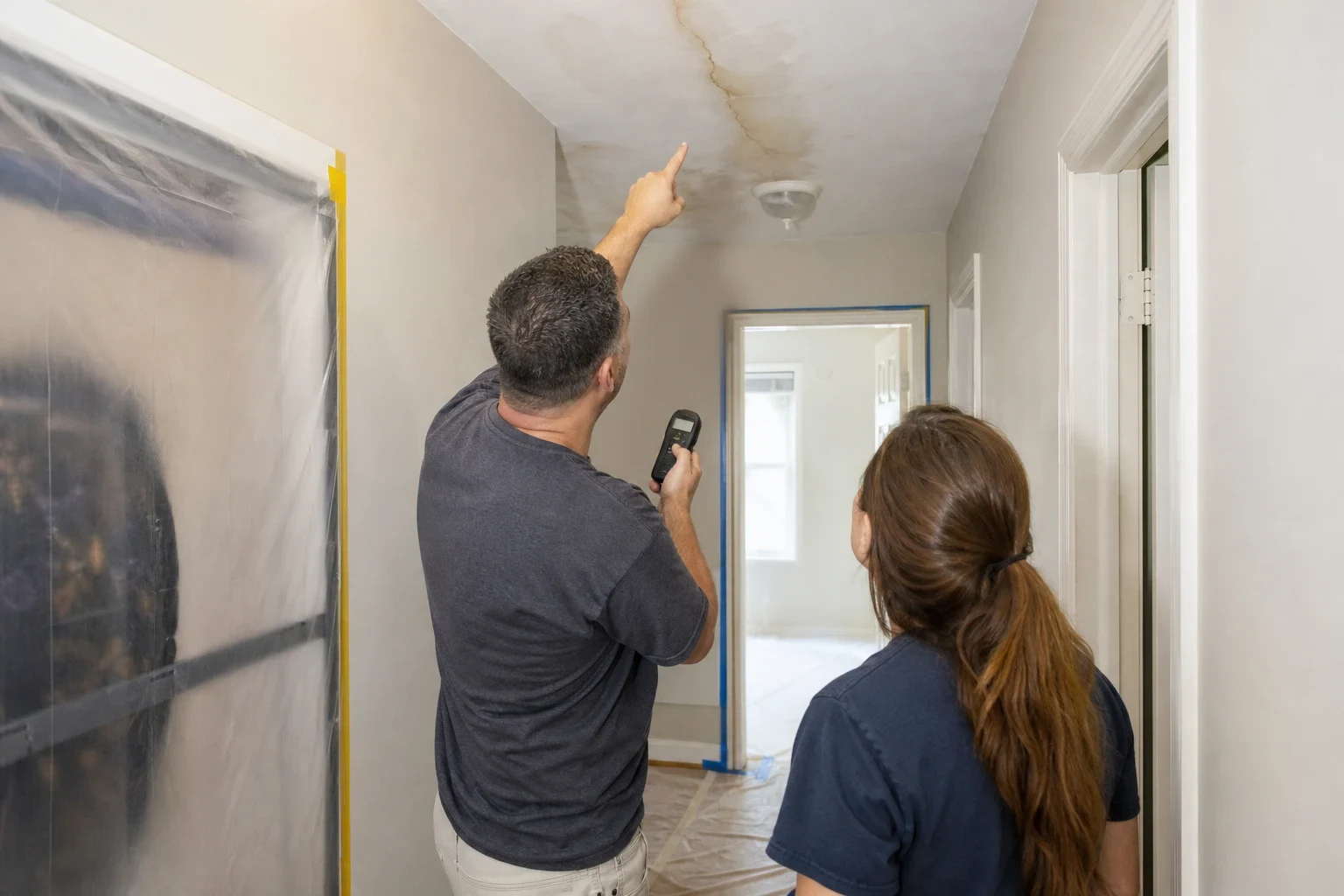
- Usually not. If the board is soft, stained or crumbling, patching over it will not hold. That calls for our drywall repair or ceiling repair service, where the damaged section is cut out and replaced.
Let's get that hole off your wall
Tell us what happened and how many spots you have. We will come take a look, explain the work and the price, and the same small crew will see it through to a clean finish.