ServicesDrywall Finishing
Drywall Finishing in Mineola
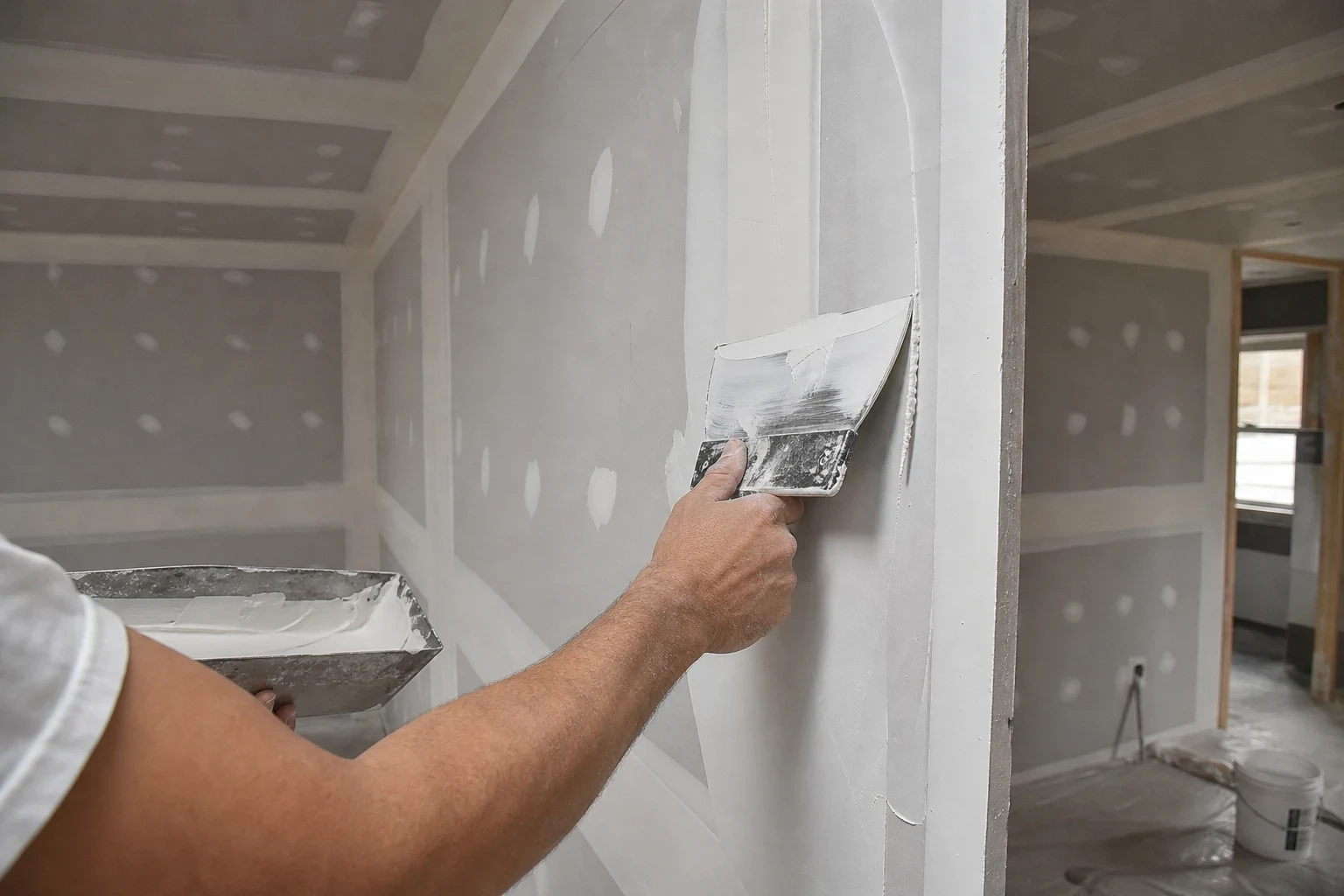
New or freshly repaired drywall needs tape, several thin coats of compound and careful sanding before it is ready for paint. We handle all of it, and the same people stay on your job from the first seam to the last pass with the sander. You end up with flat walls and a clean room.
What drywall finishing covers
Hanging drywall is only half the work. Finishing is everything after the boards are on the studs: taping the joints, setting corner bead, building up thin coats of joint compound, and sanding until the surface reads as one flat plane. Done well, nobody ever notices it. Done poorly, every seam and screw head shows the moment light hits the wall.
We finish new rooms, basement and attic conversions, and walls opened up for repairs. We also take over jobs where the boards were hung by someone else and the finishing never got done or came out rough.
Because our crew is small, the person who runs your first coat of compound is the same person who sands the last one. That matters more in finishing than almost anywhere else, since each coat depends on how the one under it was feathered.
What we do on a finishing job
Taping every joint
We embed paper tape in the flat seams and inside corners. Paper holds up better than mesh on most joints and is less likely to crack later. On patches and tricky spots we use setting compound, which hardens chemically and shrinks less.
Corner bead and outside edges
Every outside corner gets new bead, metal or paper-faced, which we line up true before building compound over it to a sharp edge. A wavy corner is one of the first things your eye catches in a finished room.
Three coats, feathered wide
Each coat is wider and thinner than the last. Feathering the compound out well past the seam is what keeps a joint from showing as a hump under paint.
Sanding and inspection under light
We sand by hand and with a pole sander, then check the wall with a work light held low across the surface. That raking light shows ridges and pinholes that overhead lights hide.
Texture matching
If the rest of the room has a knockdown, orange peel or light skim texture, we match it so new and old sections blend.
Signs your walls need finishing work
Seams showing through paint
Long straight lines or raised strips across a painted wall usually mean the joints were never feathered wide enough.
Screw pops and dimples
Small round bumps or dents in a row point to fasteners that were set too deep, too shallow or never properly covered.
Cracking tape or bubbles
Tape that lifts, blisters or cracks along a seam was often bedded without enough compound underneath. Dry winter heat tends to make it show up more.
Raw boards after a project
New drywall that was hung and left, or a repair that stopped at the board, needs proper finishing before it can be painted.
Patches you can see from across the room
A repair that shows as a flat square on a textured wall needs blending and texture matching, not more paint.
How a finishing job runs
- 1
We look at the walls first
We check the boards, fasteners and existing texture, then give you a written estimate with what we found and how many days the work should take.
- 2
We protect the room
Floors get covered, furniture is moved or wrapped, and doorways are sealed with plastic to keep dust in the work area.
- 3
Tape and coats over several visits
Compound needs time to dry between coats, so finishing happens over a few visits rather than in one long day. The same crew comes back each time, so you are not explaining your house to someone new.
- 4
Sand, check and touch up
After the final coat we sand, check every wall under raking light and fix anything that shows. If finished drywall meets existing painted areas, we can handle paint touch-ups there.
- 5
Clean up before we leave
We vacuum the dust, pull the plastic and leave a clean work area with walls ready for primer and paint.
What moves the cost of drywall finishing
Finishing is priced mostly by the amount of surface and the level of smoothness you need. We walk through those choices with you before any work starts, and the written estimate lists what is included so nothing surprises you later.
- Square footage and seams
- More boards mean more joints to tape and coat. Rooms with lots of small pieces take longer than walls hung with full sheets.
- Level of finish
- A standard finish works under most flat and eggshell paints. A full skim coat over the entire wall costs more but suits glossy paint or strong side lighting.
- Ceilings and height
- Ceilings and tall stairwell walls are slower to coat and sand, and may need extra staging.
- Texture matching
- Matching an existing texture adds time, especially when the original pattern is uneven.
- Fixing earlier work
- Finishing over boards that were hung with gaps, loose screws or damaged paper means repairs before taping can start.
Drywall finishing questions
Something not covered here? (516) 973-0369
How long does drywall finishing take?
Plan on several days for a typical room. Joint compound has to dry fully between coats, and rushing that step leads to shrinking and cracks later. Cold or humid weather slows drying further. We give you a realistic schedule in the estimate so you can plan around it.
How much dust will there be?
Sanding does make fine dust, so we seal doorways with plastic and cover floors and furniture. We vacuum at the end of each sanding day and leave the room clean when the job is done.
Do I need a skim coat over the whole wall?
Usually not. A skim coat helps when you plan to use a shiny paint or when a window throws strong light across the wall. We will tell you honestly whether your room needs it.
Can you finish drywall someone else hung?
Yes. We check the boards first and fix loose screws, gaps or torn paper before taping. If something needs rehanging, we tell you before we start and can handle it through our drywall hanging service.
Will the new section match my existing texture?
We test the texture on a scrap or small area first and adjust until it blends. Older textures can vary across a single wall, so we match what surrounds the new work.
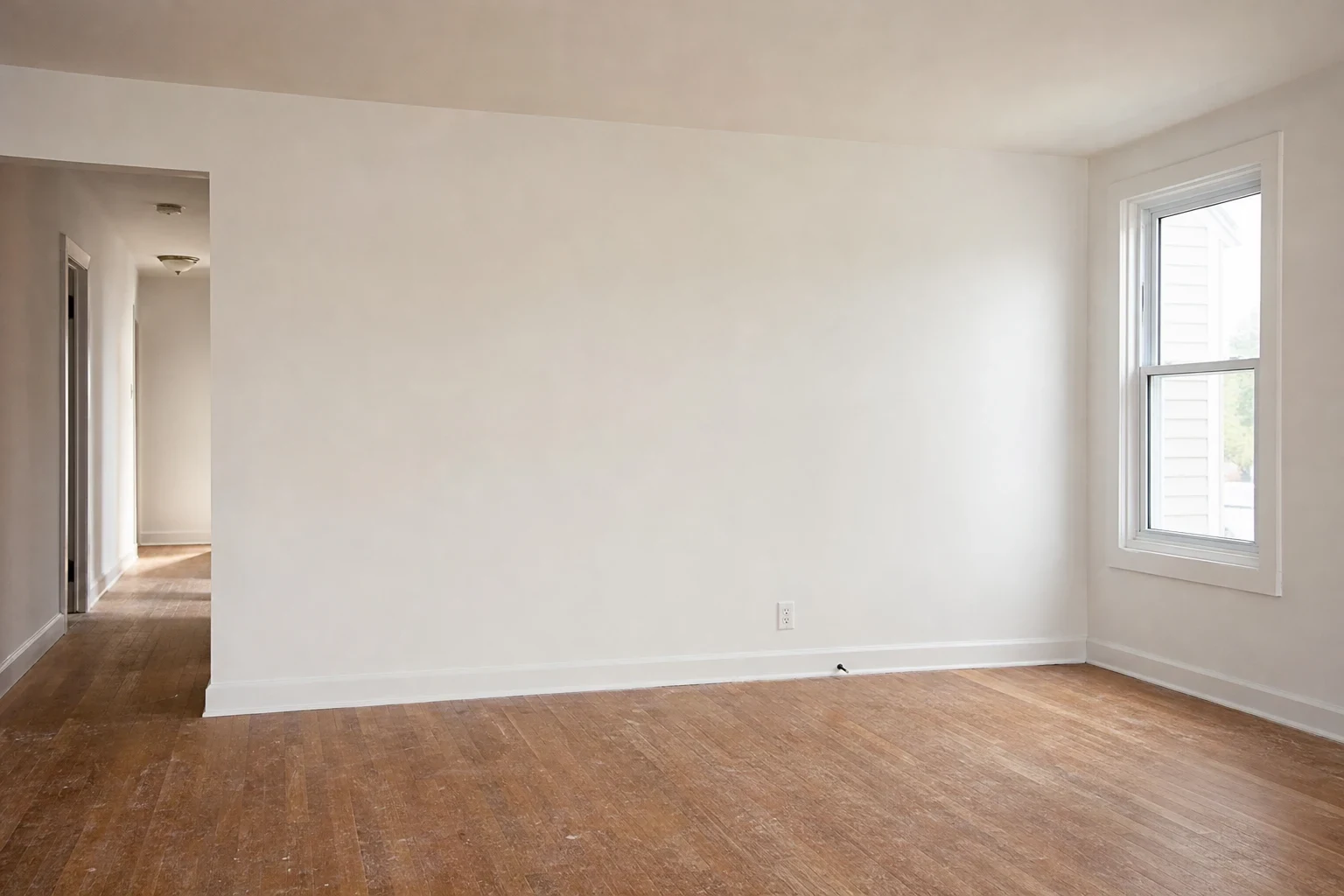
Ready for walls you don't have to stare at
Tell us about the room and where the drywall stands now. We serve Mineola and nearby towns like Garden City, Williston Park and Carle Place.