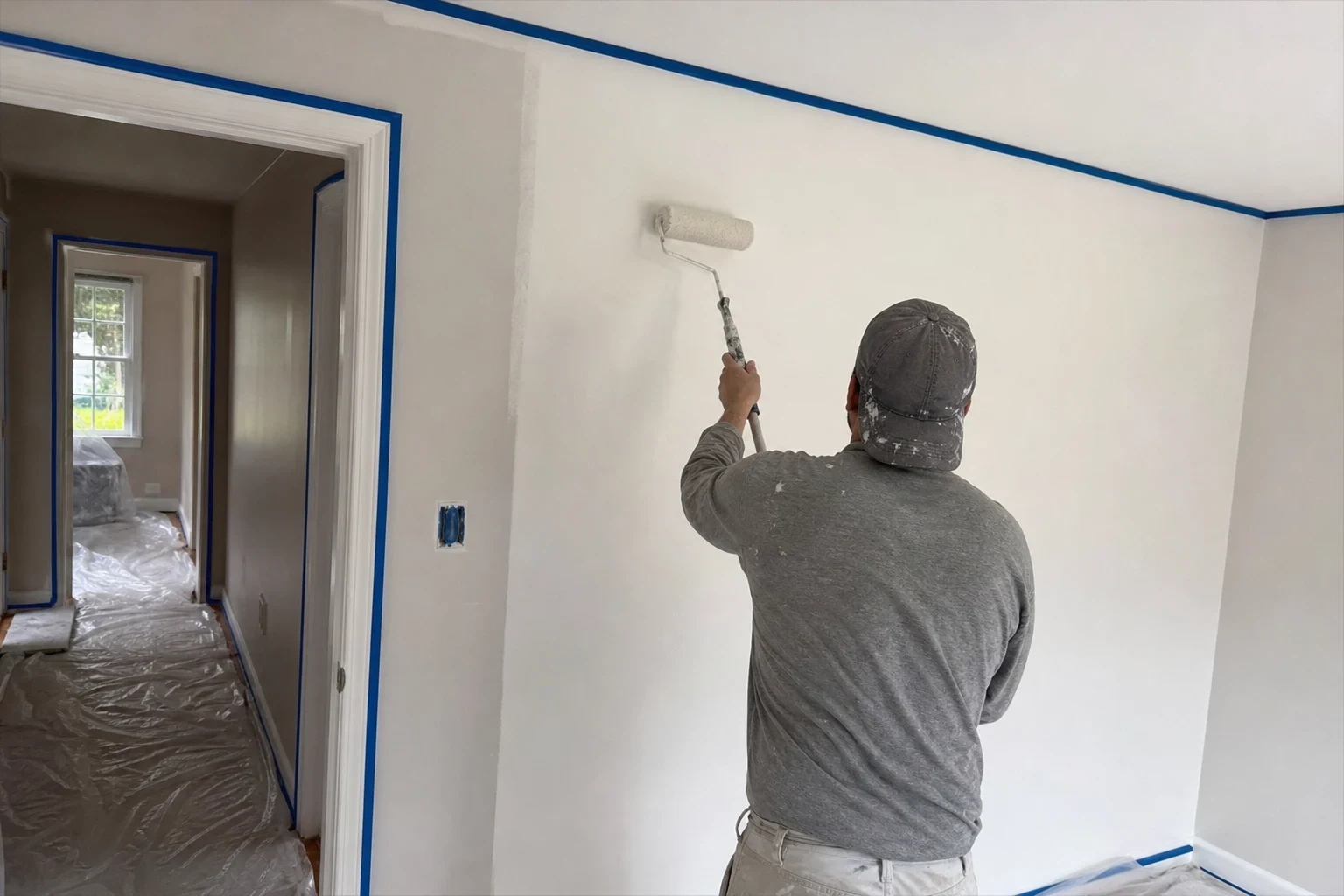
ServicesPaint-Ready Prep
Paint-Ready Wall Prep in Mineola
Fresh paint shows every dent, seam and old patch on a wall. We fix the drywall first, sand it smooth and touch up the repaired spots, so your walls are ready for a full repaint by you or your painter. The same small crew stays on your job from first look to final wipe-down.
What we do before the paint goes on
A new coat of paint is only as good as the surface under it. Nail pops, cracked tape, old anchor holes and lumpy patches all look worse once the wall is one even color, especially in flat or eggshell finishes and where light comes in low from a window. We don't repaint whole rooms. Our work is that surface: we get every wall and ceiling ready so the painting goes quickly and looks clean.
That means drywall repair and patching, skim coating where the wall needs it, sanding, texture matching on ceilings, and paint touch-ups over our own repairs. If you're painting yourself, you start on a smooth wall. If you've hired a painter, they can start rolling instead of stopping to fix holes.
We keep the crew small on purpose. The people who walk your rooms with you are the same people who come back to do the work, so they already know which spots bothered you.
What paint-prep work includes
Nail and screw pops
We reset or remove the loose fastener, drive a new screw beside it, and cover the spot with thin coats of compound. Wood framing moves a little with the seasons, so pops often show up after a winter of dry indoor heat.
Cracked seams and corners
A hairline crack over a taped joint usually means the tape has let go. We cut out the loose section, re-tape in fresh compound and feather the edges wide so the seam disappears under paint.
Holes from anchors and mounts
Small holes get filled and sanded flush. Larger openings from TV mounts or old fixtures get a backed patch or a new piece of drywall cut to fit.
Skim coating torn or rough areas
Where wallpaper removal tore the paper face, or old repairs left ridges, we seal the damaged paper first so it doesn't bubble. Then we skim the area so it takes paint evenly with the rest of the wall.
Sanding with a clean work area
We sand between coats and finish with a light pass. Floors are covered, doorways get plastic, and we vacuum the dust before we leave each day.
Spot priming and paint touch-ups
Bare compound soaks up paint differently than the wall around it, which is why unprimed patches show as dull spots. We prime every repair, and if you have the existing paint, we can touch up the spots to blend in until you repaint.
Signs your walls need work before you paint
- Bumps in a straight line
- Small round bumps spaced along a wall usually sit right over a stud. Those are fastener pops, and paint alone won't hide them.
- Shadows when the sun hits
- Old patches that look fine at noon can throw a shadow in morning or evening light. A new coat in a fresh color makes that worse, not better.
- Peeling or bubbling tape
- Tape that lifts at a seam or corner will keep lifting under new paint. It has to be cut out and redone first.
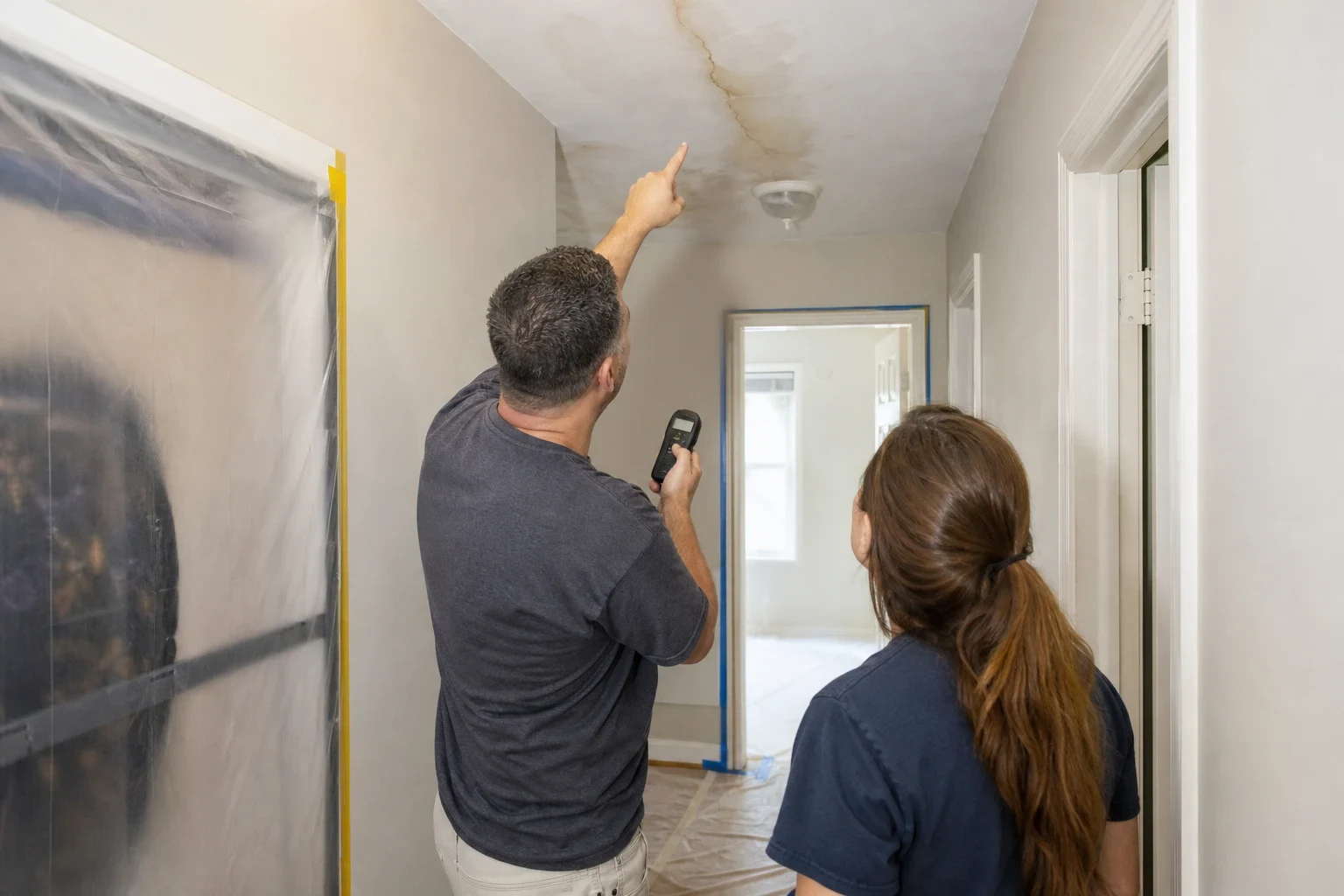
- Old stains on the ceiling
- A dried water stain will bleed through ordinary paint. We seal it, repair any soft or sagging drywall, and match the ceiling texture around it.
- Holes left behind after a move
- Landlords and owners getting a place ready often find dozens of anchor holes and dings. Fixing them all at once before painting saves a second round of work.
How a paint-prep job runs
- 1
We walk the rooms with you
You show us what bothers you, and we point out anything that will show once the walls are painted. We mark each spot with painter's tape so nothing gets missed.
- 2
You get a written estimate
The estimate lists the work room by room, so you can see what each repair is and decide what to do now.
- 3
We protect the room and start repairs
We cover the floors, move or cover furniture, and seal doorways. Compound needs drying time between coats, so most jobs take more than one visit, and the same people come back each time.
- 4
Sand, prime and check under a light
After the final coat dries, we sand and hold a work light low against the wall to catch any edge or ridge. Anything that shows gets another pass before we prime.
- 5
A clean room, ready for paint
We vacuum, pull the plastic and walk the room with you again. If a painter is coming next, we'll tell you what primer we used so they can plan their coats.
What affects the price of paint prep
We price after seeing the walls in person, because two rooms of the same size can be very different jobs. A bedroom with a few nail holes is quick. A living room with torn wallpaper paper and cracked seams takes longer. These are the things that move the number most.
- How many repairs, and how big
- A handful of small holes is a short job. Large patches, cut-in pieces of new drywall and long cracked seams add materials and time.
- Spot fixes or a full skim coat
- Spot repairs cost less than skimming a whole wall. We'll tell you honestly when spots will do and when a skim coat is the only way the wall will look even.
- Ceilings, stairwells and high walls
- Overhead work and tall stairwell walls need ladders or planks and go slower. Matching an existing ceiling texture also adds time.
- Drying time and return visits
- Each coat of compound has to dry before the next one. Deeper repairs need more coats, and more coats mean more trips back.
Questions about getting walls ready to paint
- Do you paint the whole room after the repairs?
- No. We handle the drywall side: repairs, sanding, priming and touch-ups over the spots we fixed. You or your painter take it from there with a smooth, primed surface to work on.
- How soon can the walls be painted after you finish?
- Once we've primed and walked the room with you, the walls are ready for paint. We don't prime over compound that is still damp, so by the time we hand the room back, the repairs are fully dry.
- Will the repaired spots show through the new paint?
- Not when the edges are feathered wide, sanded flat and primed. Unprimed patches are the usual reason repairs show as dull or shiny spots, which is why we prime every one. We also check each repair under a low work light before we call it done.
- Can you match the texture on my ceiling?
- Yes. We look at how the existing texture was applied and match it around the repair so the patch doesn't stand out once the ceiling is painted. Our Ceiling Repair page covers sagging, cracked and stained ceilings in more detail.
- Do I need to empty the room before you start?
- Please clear small items, pictures and anything fragile. We can shift larger furniture to the middle of the room and cover it, and we cover the floors before any sanding starts.
- Do you work outside Mineola?
- Yes. We also prep walls in nearby towns such as Garden City, Williston Park, Carle Place, Albertson and East Williston. Ask when you call and we'll let you know if your street is in our area.
Get your walls ready for a fresh coat
Tell us which rooms you plan to paint and what you've noticed on the walls. We'll set a time to look and give you a written estimate.