ServicesCeiling Repair
Ceiling Repair in Mineola
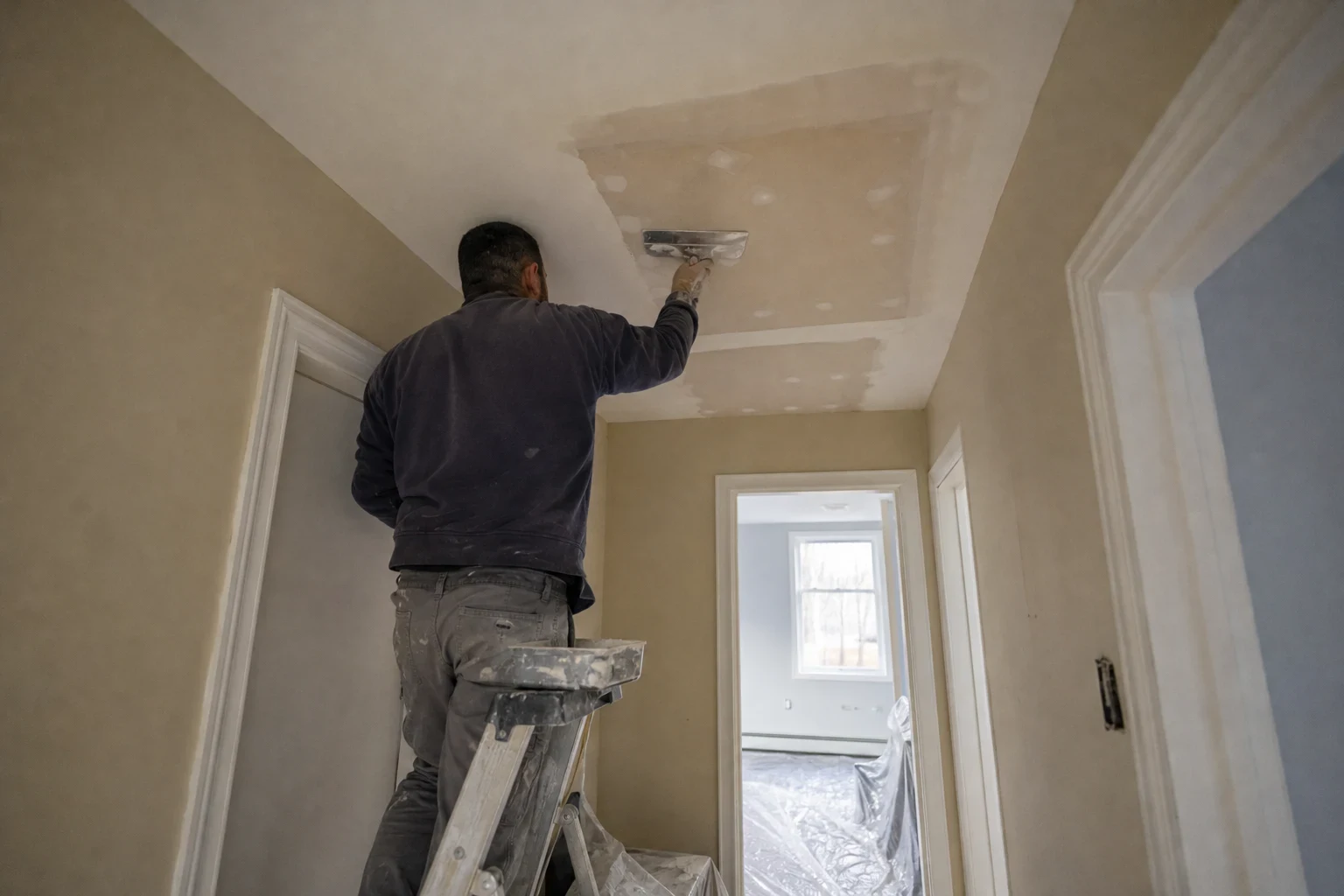
A stain spreading overhead or a crack that keeps growing is hard to ignore. We cut out the damage, rebuild the drywall, match the texture and prime it for a paint touch-up. The same small crew handles your ceiling from the first look to the last pass of sanding.
When Your Ceiling Needs More Than a Dab of Spackle
Ceilings fail differently than walls. Gravity works on every loose seam, wet drywall loses its strength fast, and light from a window shows every ridge in a patch. A ceiling repair has to be secured to the framing, taped flat and textured so it disappears when you look up.
We keep our crew small on purpose. The person who looks at your ceiling is the person who cuts it open, hangs the new piece and does the finish work. You are not explaining the problem again to someone new each day, and nothing gets lost between visits.
If the damage is on a wall instead, our wall repair page covers that work. For a few small dings overhead, drywall patching may be all you need.
What Our Ceiling Repair Covers
Water-damaged drywall
Once the leak above has been fixed and the area is dry, we cut back to solid board, check the framing and insulation for moisture and replace what is soft or stained through.
Cracks along seams and corners
Recurring cracks usually mean failed tape. We remove the loose tape, re-tape with fresh compound and feather the joint wide so it stays flat.
Sagging panels
A sag often comes from fasteners pulling loose or board that took on water. We refasten into the joists with screws, or replace the panel if it has lost its shape.
Texture matching
Knockdown, orange peel, swirl or a smooth finish. We test the texture on a scrap first so the repair blends with the ceiling around it.
Holes from fixtures and access
Old light boxes, removed fans and access cuts made by other trades get a properly backed patch instead of a piece of tape and hope.
Prime and paint touch-up
We seal the repaired area with primer and can follow with a paint touch-up so the spot does not flash under your lights.
Signs Your Ceiling Is Ready for Repair
- A brown or yellow ring
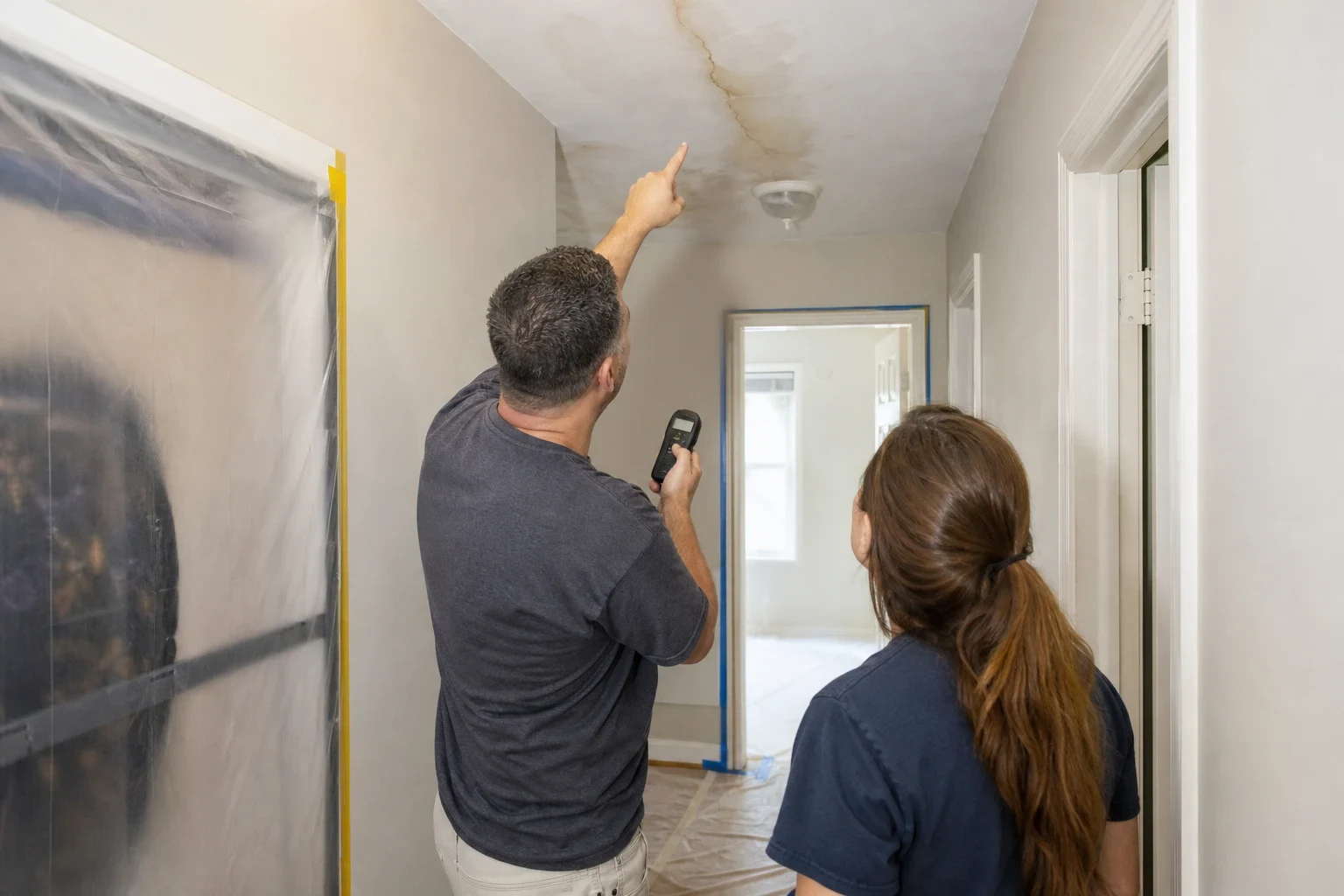
- Stains mean water got into the drywall at some point. Even after it dries, the board can be weakened and the stain will bleed through ordinary paint.
- A dip you can see from across the room
- Sagging gets worse over time. Have it looked at before a panel or seam lets go.
- Nail pops in a line
- Small round bumps along a joist mean fasteners are backing out. They are easy to fix early and only get more noticeable.
- Cracks that come back
- If you have filled the same crack twice, the tape underneath has failed and needs to be redone.
- Bubbling or peeling paint overhead
- This often points to moisture behind the surface, especially in bathrooms without good ventilation.
How a Ceiling Repair Day Goes
- 1
We look and explain
We check the damage, press on the surrounding drywall to find where it is still solid and tell you plainly what needs replacing and what can stay.
- 2
We protect the room
Furniture is moved or covered, floors get drop cloths and we hang plastic where dust could drift into the rest of your home. Ceiling work drops debris, so this step matters.
- 3
Cut out, secure and hang
We remove the damaged section back to the joists, add backing where needed and screw in new drywall cut to fit.
- 4
Tape, mud and texture
Joints are taped and coated in thin layers, with drying time between coats. Then we apply texture to match. Larger repairs usually take more than one visit for this reason.
- 5
Sand, prime and clean up
We sand the area smooth, prime it, handle any paint touch-up you asked for and leave a clean work area behind.
What Affects the Cost of Ceiling Repair
Every ceiling is priced after we see it, because the size of the stain rarely tells the whole story. We walk you through what is driving the number before any work starts, so there are no surprises once the drywall is open.
- How much board has to come out
- A small stain may need a two-foot patch. Water that spread along the joists can mean replacing a full sheet or more.
- Texture type
- Smooth ceilings take careful feathering. Matching knockdown or older textured finishes adds time and testing.
- Plaster versus drywall
- Many older homes around Mineola still have plaster ceilings, which need a different approach where new drywall meets the old surface.
- Reaching the damaged spot
- A ceiling above a staircase or in a tall room means setting up planks or scaffolding safely before we can start. A crowded room also takes longer to clear and cover.
- What we find behind it
- Wet insulation or damaged framing has to be dealt with before the ceiling closes back up.
Ceiling Repair Questions
- Do I need to fix the leak before you repair the ceiling?
- Yes. The source of the water has to be stopped and the area fully dried first, or the new drywall will stain and soften again. If you are not sure the leak is fixed, we can open the ceiling, look at the framing and let you know what we see before we close it up.
- Can you match my textured ceiling?
- In most cases, yes. We test the texture on a scrap piece and adjust until it looks right before we apply it overhead. Very old or unusual textures can be harder, and we will tell you honestly how close we expect to get.
- What about older popcorn ceilings?
- Popcorn texture applied decades ago can contain asbestos. We recommend having it tested before anyone cuts into it, and we will not disturb it until you know what you have.
- How messy is ceiling work?
- Cutting and sanding overhead does create dust and debris. We cover floors and furniture, seal off the room with plastic when it makes sense and clean up at the end of each visit.
- How long will the repair take?
- A small patch can often be finished in a couple of short visits. Bigger repairs need drying time between coats of compound, so they usually span a few days. We will give you the expected schedule up front.
Let's Get That Ceiling Fixed
Tell us what you are seeing overhead and we will talk through the likely repair. We work in Mineola and nearby towns like Garden City, Williston Park and Carle Place.